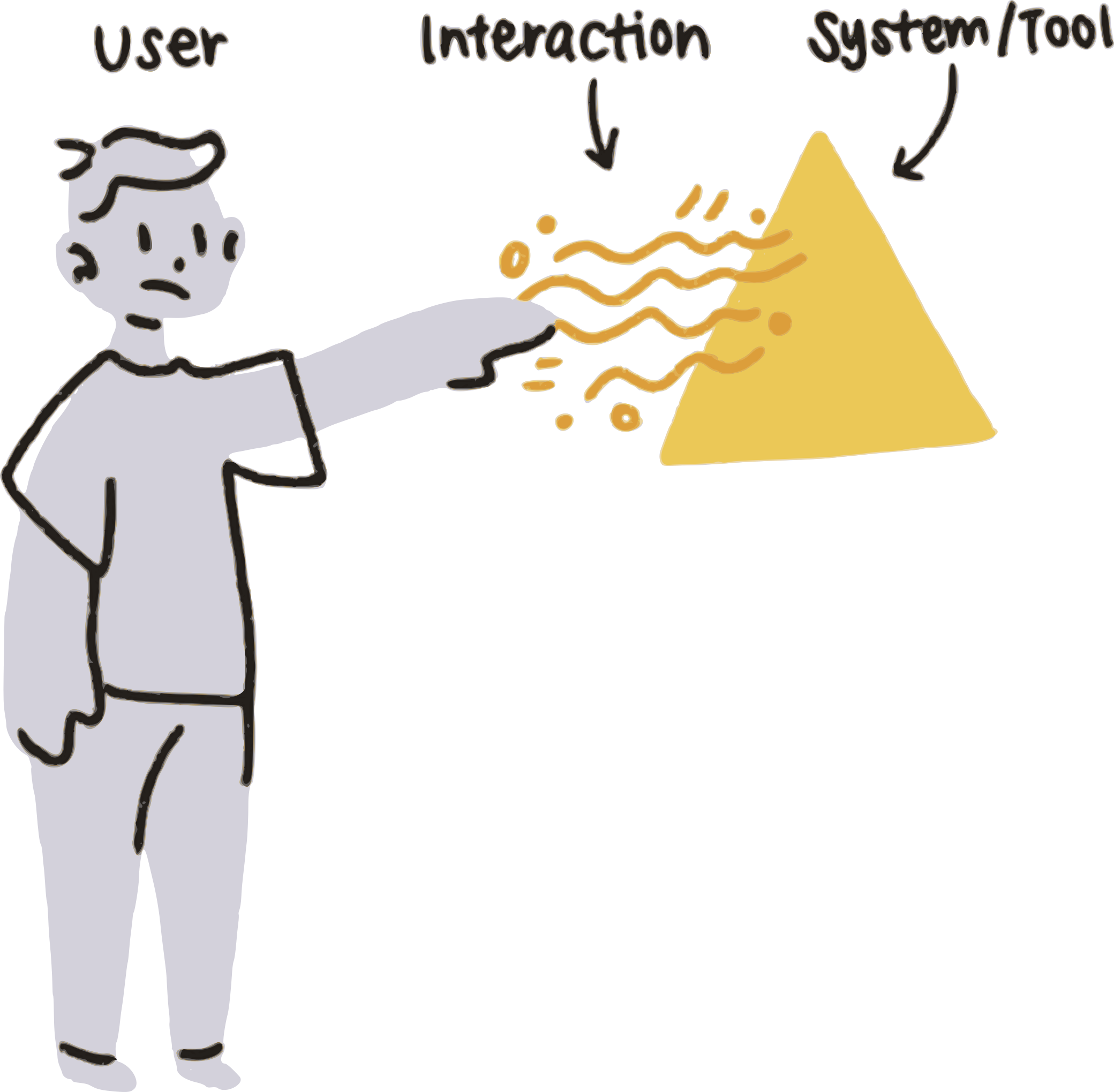
We believe that wearable computing and intelligent user interface systems offer tremendous opportunities to revolutionize our daily interactions. However, today's user interfaces still often fail to meet actual needs — especially for people with disabilities who rely on assistive technologies.
We advocate for a paradigm shift where technology is not seen as a separate tool, but as a seamless extension of the human body, mind, and identity. We call this holistic approach "Assistive Augmentation."
Read the full article
Traditional approach — technology designed as a separate tool that requires the user to adapt to its constraints and interfaces.
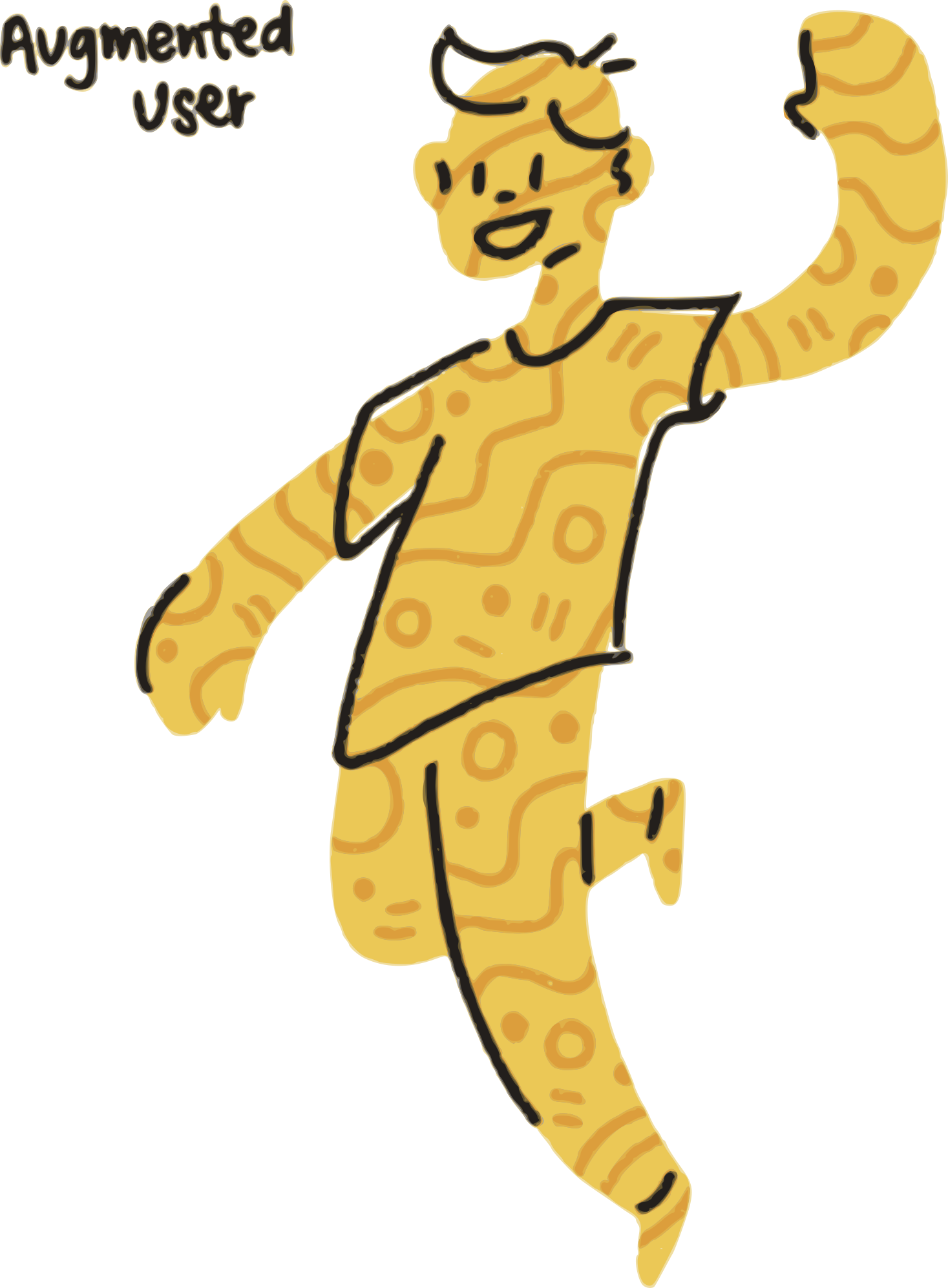
Our approach — technology becomes a natural extension of the person, seamlessly enhancing physical, cognitive, and perceptual capabilities.
Six principles that guide the design of technologies which truly become part of the person.
Technology must respect and work with the user's body, considering physical comfort, ergonomics, and the intimate relationship between device and wearer.
Augmentations should align with natural cognitive processes, reducing mental load while enhancing learning, memory, and decision-making.
Design interfaces that expand sensory experiences — translating information across modalities so sight, sound, and touch work in powerful new ways.
The augmentation must consider the physical environment and context of use, adapting to real-world constraints and varied conditions.
Technology should preserve and enhance the user's sense of self. Assistive devices must empower without stigmatizing or diminishing personal identity.
Augmentations must account for social dynamics and cultural contexts, enabling meaningful human interactions rather than creating barriers.
We aim to take on the Assistive Augmentation perspective by seamlessly enhancing perceptual, physical, and cognitive abilities.
Wearable AI assistant enabling vision impaired people to access the visual world.
Novel extended reality experiences leveraging floating tanks to mitigate aquaphobia.
Exploring drones as an assistive companion for vision impaired people.
Enabling intuitive mouth interactions through a novel chewable mouth interface.
Dive deeper into the research behind our vision and the projects that bring it to life.
Publications